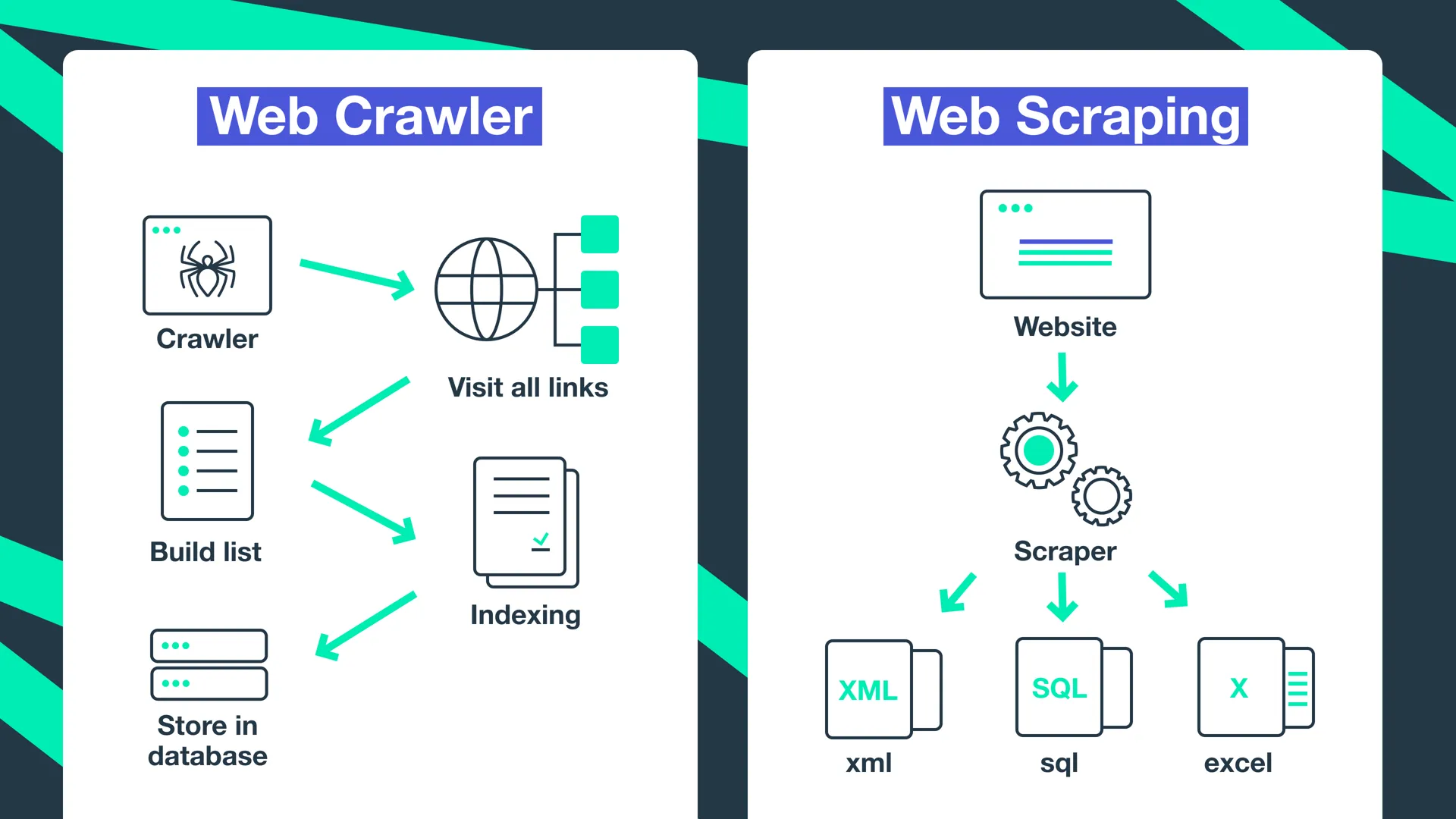
Data crawling, often referred to as web crawling, is the automated process of systematically browsing and collecting information from the internet. Utilizing specialized programs known as crawlers or spiders, data crawling enables the extraction of vast amounts of data from websites for various purposes. While data crawling is a powerful tool for collecting information, it's crucial to conduct it responsibly, respecting both legal frameworks and ethical norms to maintain the integrity of data collection practices.
- Monitor Competitor Activities: Systematically extract data from competitor websites to track pricing strategies, product offerings, and promotional campaigns. This insight allows businesses to adapt and stay competitive
- Analyze Market Trends: Aggregate data from diverse online sources to identify emerging trends, consumer preferences, and potential market gaps, aiding in strategic planning and product development.
- Real-Time Data Access: Continuous crawling provides up-to-date information, enabling businesses to make informed decisions promptly.
- Data Aggregation: Combine data from multiple online platforms to gain a comprehensive view of the market, facilitating better analysis and reporting.
- Identify Market Gaps: Analyze competitor products and customer feedback to uncover unmet needs and opportunities for new product development.
- Monitor Industry Innovations: Keep track of technological advancements and industry shifts to inform product design and feature enhancements.
- Automated Data Collection: Reduce the need for manual data entry by automating the extraction of information from various online sources, saving time and resources.
- Scalability: Easily scale data collection efforts to cover a broader range of sources without proportional increases in cost or labor.